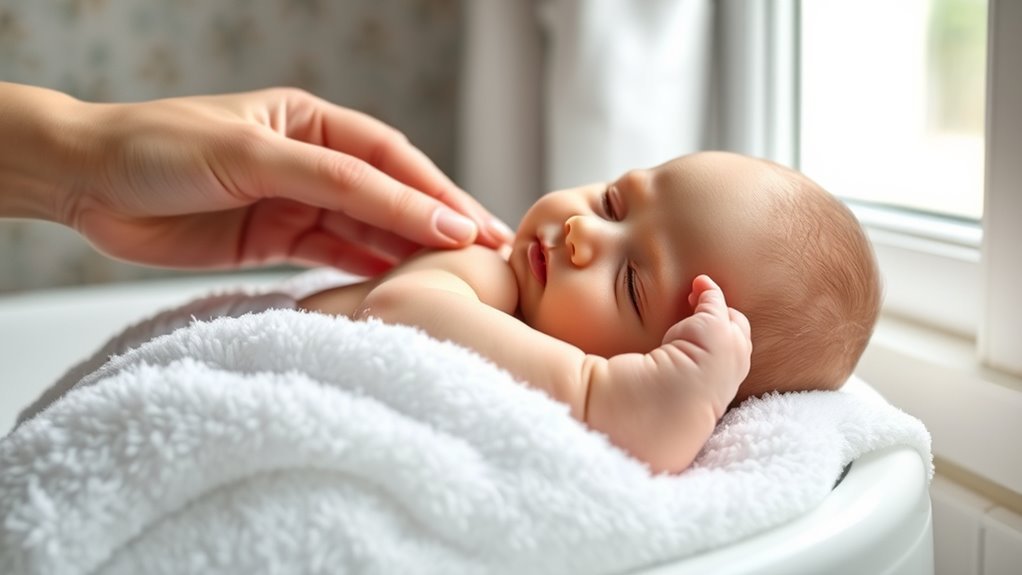
How Often Should You Bathe a 3-Month-Old Baby
You should bathe your 3-month-old about once a week since babies at this age usually don’t get very dirty.
Over-bathing can dry out their sensitive skin, so it’s best to keep full baths to a minimum. Instead, use gentle sponge baths or damp cloths daily for key areas like the face, neck, and diaper region.
Pay attention to how your baby’s skin responds and adjust the frequency if they’re more active or their skin feels dry.
Finding the right balance helps maintain both comfort and cleanliness.
Remember, every baby is different, so fine-tuning bath time to your little one’s needs is important.
This way, you keep your baby fresh without harming their delicate skin.
Key Takeaways
- Bathe a 3-month-old baby about once a week to keep them clean without drying out their skin.
- Use sponge baths or damp cloths every day to clean the face, neck, and diaper area between full baths.
- Choose mild baby shampoo and avoid harsh soaps. This helps protect their sensitive skin during baths.
- If your baby is very active or gets dirtier than usual, you can increase baths to twice a week.
- Keep an eye on their skin for any dryness or irritation. If you notice any, you might want to adjust how often you bathe them.
How Often Should You Bathe Your 3-Month-Old Baby?
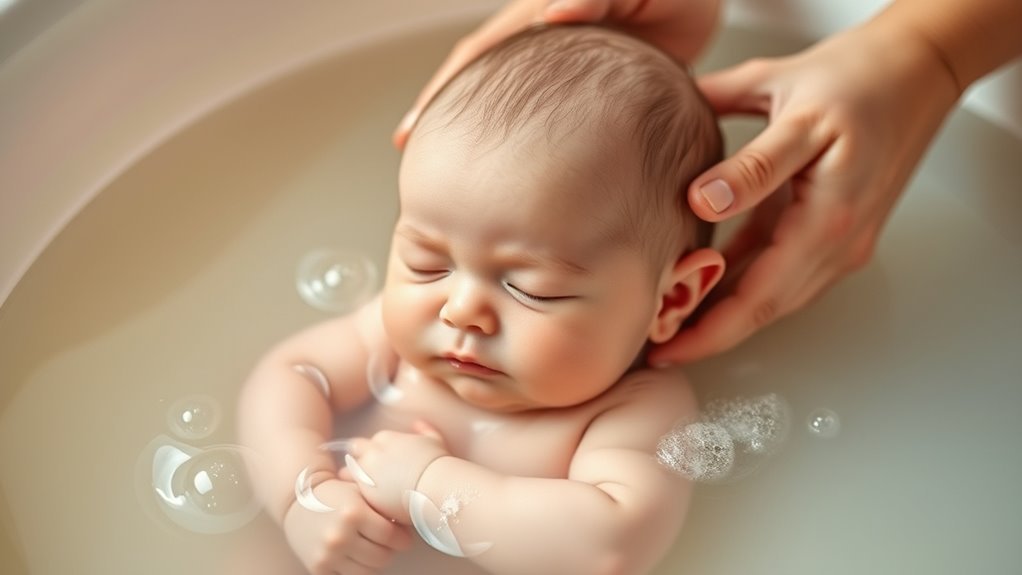
How often should you bathe your 3-month-old baby? Generally, bathing your baby once a week is enough since infants at this age don’t usually get very dirty.
Bathing your 3-month-old once a week is usually sufficient since they typically stay clean.
Between baths, you can use sponge baths or wet cloth daily washes to clean key areas like the face, neck, and diaper area.
When you do give a full bath, use mild baby shampoo to protect their sensitive skin. Avoid bathing your baby too often, as frequent baths can cause dry skin.
Always monitor skin condition closely; if you notice dryness or irritation, adjust the frequency or products you use.
Keeping your baby clean while preventing dry skin is all about balancing baths with gentle daily washes focused on key areas.
How to Adjust Bathing Frequency Based on Your Baby’s Skin and Activity
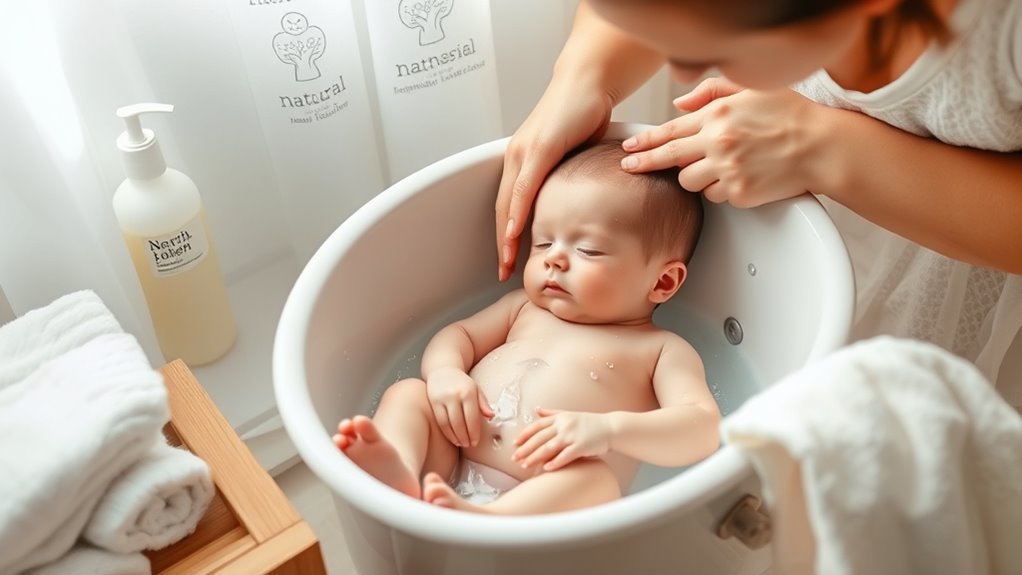
Although most 3-month-olds only need a bath once a week, you should adjust the frequency based on your baby’s skin condition and activity level. If your baby’s skin looks dry or irritated, reduce baths and use a damp washcloth for gentle cleaning.
For more active babies or those who sweat, consider bathing twice a week to keep their skin clean and comfortable. Always monitor how your baby responds and adjust accordingly.
Here’s how to decide:
- Bathe less if skin is dry, using moisturizing products to soothe.
- Bathe twice a week if your baby’s activity increases sweat and dirt.
- Use a washcloth between baths to maintain comfort and cleanliness.
Frequently Asked Questions
What Happens if You Don’t Bathe a Baby Enough?
If you don’t bathe your baby enough, sweat, oils, and dead skin build up, causing rashes, irritation, and unpleasant odors. You’ll also increase infection risks and discomfort.
This makes it harder to keep their delicate skin healthy and clean. So, regular baths really help keep your little one comfortable and happy.
What Is the Normal Weight for a 3 Month Old Baby?
Imagine a tiny bundle gaining strength daily—your 3-month-old baby typically weighs between 12.5 to 16.5 pounds. You’ll notice their steady growth, doubling birth weight soon.
But remember, every baby’s pace is unique. Some might grow a bit faster or slower, and that’s perfectly okay.
When to Start Giving Daily Baths?
You can start giving daily baths when your baby enjoys the routine and isn’t showing dry skin.
Make it part of bedtime if it calms them, but adjust frequency based on their activity and skin needs.
It’s all about what works best for your little one. Just keep an eye on how their skin reacts and go from there!
Do You Wash a Baby’s Head or Body First?
You wash your baby’s head first to avoid re-soaping already rinsed areas. Start by gently wetting their hair with a damp cloth, then apply mild shampoo.
After that, move on to the face and body with a soft washcloth. It’s all about being gentle and making sure everything gets cleaned properly.
Conclusion
So, how often should you bathe your 3-month-old? Usually, two to three times a week is enough to keep your baby clean without drying out their delicate skin.
Of course, if your little one gets extra messy or enjoys splashing around, you can bathe them more often. Just pay attention to how their skin reacts and adjust accordingly.
After all, isn’t keeping your baby comfortable and happy what matters most? Bathing a 3-month-old baby the right amount helps maintain their skin’s health and keeps them feeling fresh. Remember, frequent baths aren’t always necessary, but regular cleaning is important for hygiene and comfort. So, finding a balance that suits your baby’s needs is key. A gentle routine with two to three baths a week usually works well for most parents and babies alike.