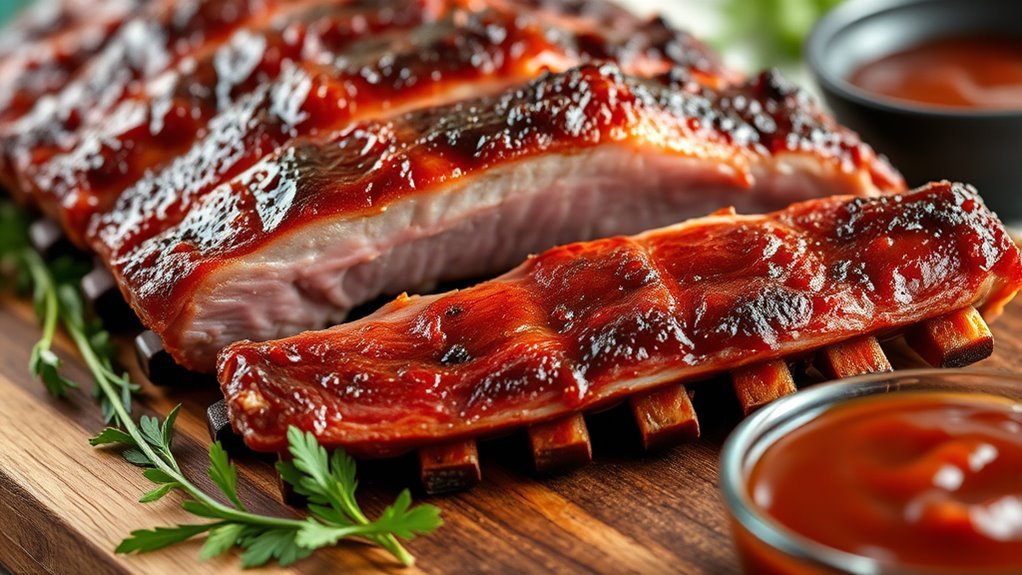
Are Baby Back Ribs Pork or Beef?
You’re dealing with pork when you’re enjoying baby back ribs, not beef. These ribs come from the upper ribcage of a pig and are smaller, leaner, and more curved than beef ribs.
They’re known for their tender texture and quicker cooking time, making them perfect for grilling or oven-roasting.
If you want to know how to spot baby back ribs and what makes them special compared to other rib cuts, keep exploring for more insights.
They’re a favorite for many because they cook faster and stay juicy, which is great whether you’re a BBQ pro or just starting out.
So, next time you’re shopping or ordering, you’ll know exactly what you’re getting!
Key Takeaways
- Baby back ribs are pork ribs sourced from the upper ribcage of a pig. They’re smaller, leaner, and more curved compared to beef ribs.
- Typically, baby back ribs weigh about 2 pounds and have a tender texture.
- On the other hand, beef ribs are larger, coarser, and need longer cooking times than baby back ribs.
- So, to sum it up, baby back ribs are pork, not beef.
What Are Baby Back Ribs? Where Do They Come From?
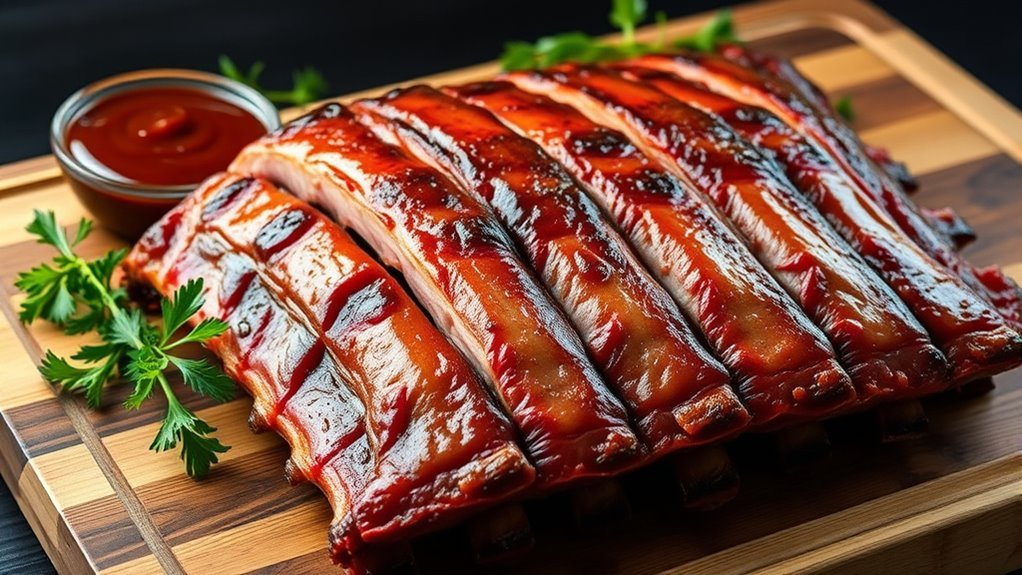
Baby back ribs, also called pork back ribs, come from the upper ribcage of a pig where the ribs connect to the spine. These ribs are shorter and more curved than other cuts, giving them a smaller size that’s perfect if you want tender, lean meat.
Because they come from the upper ribcage, baby back ribs cook faster and respond well to various cooking methods like grilling or oven-roasting. You’ll find them especially popular in BBQ recipes since their natural tenderness pairs beautifully with sticky glazes and rich BBQ sauces.
If you’re aiming for ribs that are flavorful yet quick to prepare, baby back ribs offer a great balance of lean meat and ease of cooking. They’re definitely a favorite choice for any rib lover.
How Can You Tell If Baby Back Ribs Are Pork or Beef?
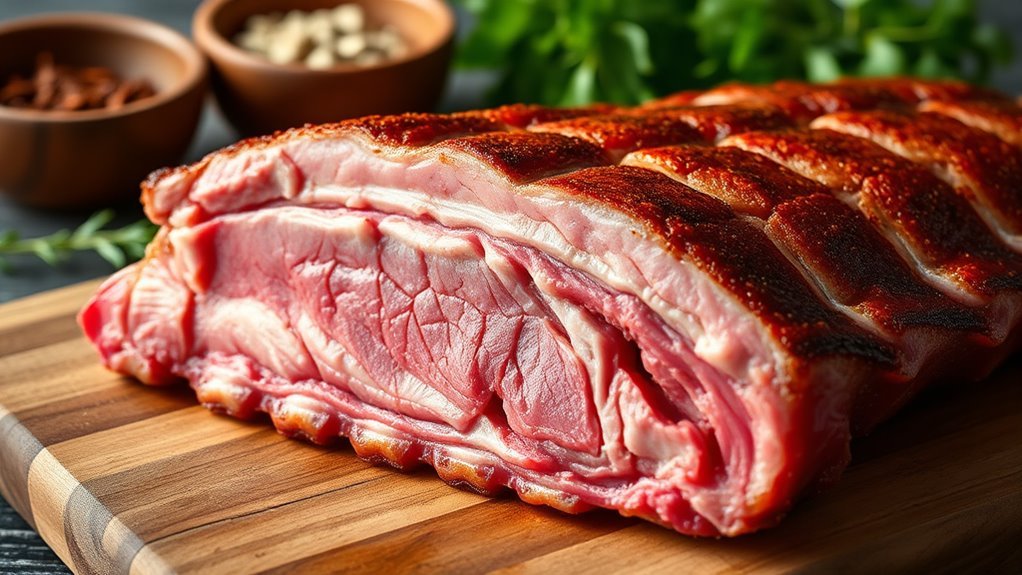
How can you easily tell if ribs are pork or beef just by looking at them? Baby back ribs come from the upper ribcage of pigs, so if the ribs are smaller, leaner, and curved, they’re pork. They usually weigh about 2 pounds and are known for their tenderness, cooking faster than spare ribs.
Smaller, leaner, and curved ribs are pork baby back ribs, tender and quick to cook.
Beef ribs, on the other hand, are larger, come from the upper ribcage of cows, and have a coarser texture. Often called dinosaur ribs, beef ribs require longer cooking methods to become tender.
If you’re grilling, baby back ribs are perfect because they cook quickly and stay tender. Spare ribs differ in size and texture, making them less lean than baby back ribs.
Knowing these differences helps you pick the right ribs for your meal.
Frequently Asked Questions
How to Tell if a Rib Is Pork or Beef?
You can tell if a rib is pork or beef by its size, shape, and flavor. Pork ribs are smaller, leaner, and curved.
Beef ribs, on the other hand, are larger, thicker, and have a richer, beefier taste with more fat. So, next time you’re at the grill, take a closer look and give them a little sniff!
Is Texas Roadhouse Ribs Beef or Pork?
When you bite into Texas Roadhouse ribs, you’re savoring tender pork ribs that melt like butter. They’re pork baby back ribs, seasoned and slow-cooked to create that unforgettable, fall-off-the-bone experience you crave every time.
Seriously, these ribs are all about that juicy, flavorful pork goodness. So, if you’re wondering, it’s definitely pork ribs you’re enjoying here.
Is There a Beef Baby Back Rib?
No, there isn’t a beef baby back rib. Baby back ribs come only from pork, taken from the pig’s upper ribcage.
Beef ribs are categorized differently, like back ribs or short ribs, not baby backs. So, if you’re looking for baby back ribs, you’re definitely talking about pork.
Why Do Restaurants Not Serve Beef Ribs?
Restaurants don’t serve beef ribs often because they take longer to cook, cost more, and are harder to prepare.
You’ll find pork ribs more popular since they’re easier to handle, cheaper, and customers prefer them.
It’s really about convenience and cost for most spots. Plus, pork ribs just tend to be a crowd-pleaser.
Conclusion
Now that you know baby back ribs come from the pig’s upper rib cage, you’ll never mix them up with beef ribs again. You can tell pork ribs by their smaller size and curved shape, unlike the larger, straighter beef ribs.
So next time you’re at the grill, trust your eyes and taste buds—they’ll guide you better than a map in a rib jungle. Enjoy that mouthwatering pork perfection!
Remember, baby back ribs are always pork ribs, not beef. Their tender, juicy flavor and distinct shape make them a favorite for barbecue lovers everywhere. So whether you’re cooking for family or friends, choosing baby back ribs means you’re going for that classic pork rib taste that’s hard to beat. Keep this in mind, and you’ll confidently pick the right ribs every time!





One Comment