At What Age Does a Baby Start Smiling?
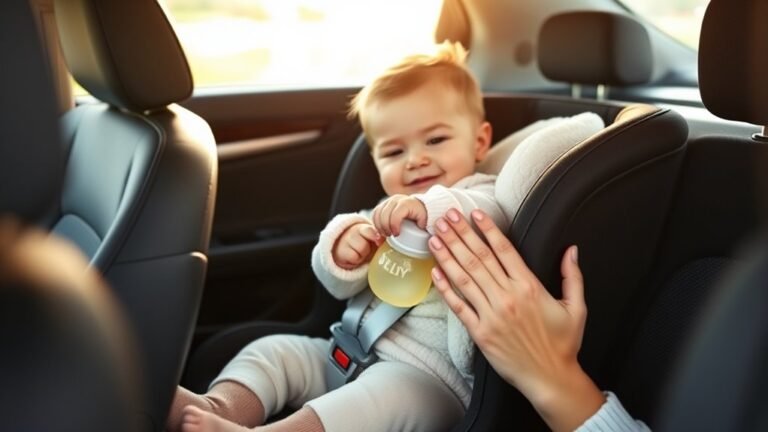
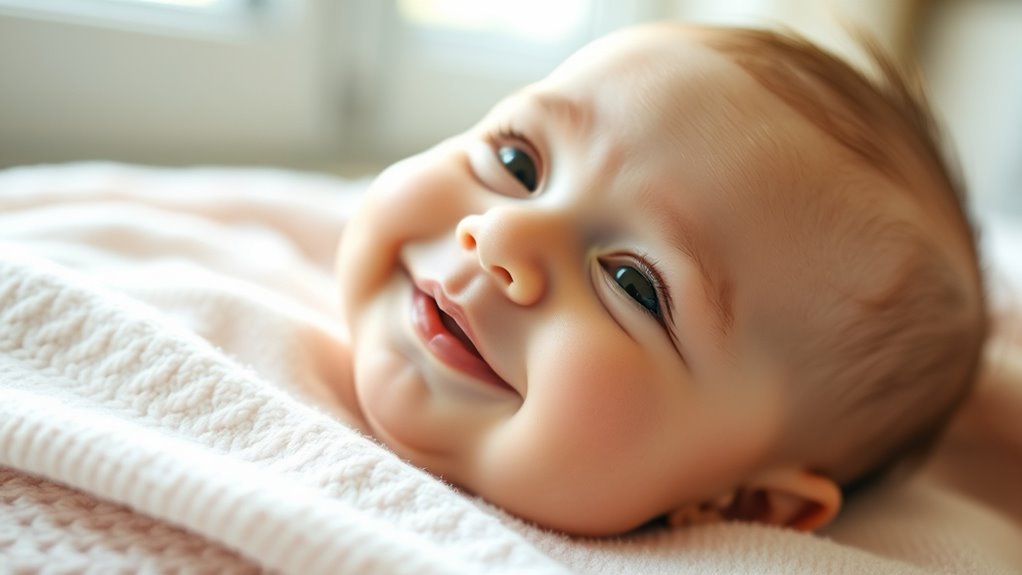
You can expect your baby to start showing genuine social smiles around 6 to 8 weeks, usually by the end of their second month.
These early smiles are an important milestone in your baby’s development and a sign they’re beginning to recognize you. Social smiles involve the whole face and respond to familiar voices or faces, unlike reflex smiles that only use the mouth.
If your baby hasn’t started smiling by 12 weeks, it might be a good idea to consult a pediatrician just to be sure everything is on track.
Remember, every baby develops at their own pace. Understanding how to encourage these smiles and support shy babies can really help you nurture their early social development.
It’s all about creating a warm, loving environment where your little one feels safe to express themselves.
Key Takeaways
- Babies typically start showing social smiles around 6 to 8 weeks of age. Genuine smiles that engage the whole face appear by the end of the second month.
- Reflex smiles happen earlier, but they only involve the mouth and aren’t social responses.
- By 2 to 3 months, babies smile more in response to familiar voices or faces. It’s their way of connecting and recognizing loved ones.
- If a baby doesn’t smile socially by 12 weeks, it’s a good idea to check in with a pediatrician. They can help make sure everything is on track.
When Do Babies Start Smiling? How to Recognize Real Smiles
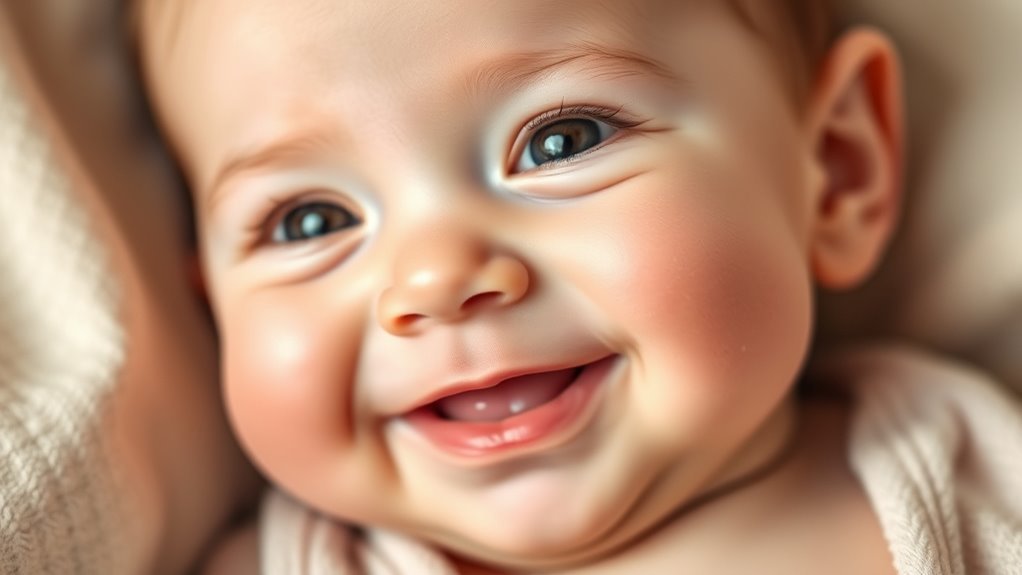
When do babies start smiling, and how can you tell if it’s real? Most babies start showing social smiles around 6 to 8 weeks. Your baby’s first smiles often appear by the end of the second month.
These genuine smiles involve the whole face and happen as a response to familiar voices or faces. They’re different from reflex smiles that only involve the mouth and happen without any interaction.
By 2 to 3 months, your baby will engage more socially, hitting key developmental milestones like following faces and responding with smiles. The American Academy of Pediatrics advises you to respond to your baby’s social smiles because these are important signs of healthy development.
If your baby isn’t smiling socially by 12 weeks, it’s a good idea to consider consulting a pediatrician. They can help make sure everything is on track.
How to Encourage Your Baby’s Social Smiles: and What to Do If They’re Shy
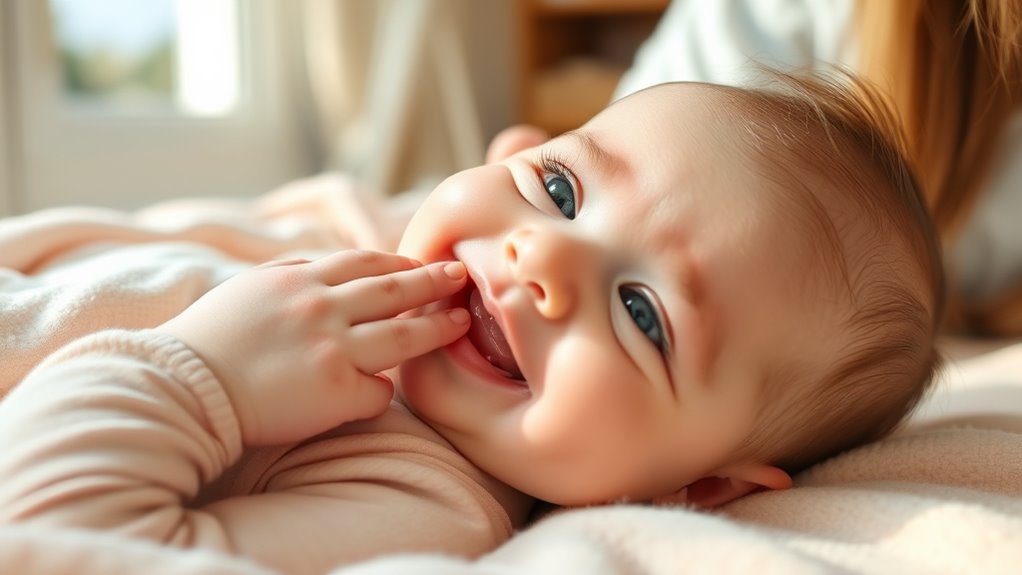
Although some babies may be naturally shy or take a little longer to warm up, you can encourage social smiles by engaging in face-to-face interactions like making eye contact and smiling back.
In the first few weeks, talking, singing, and reading aloud help your baby respond and build emotional bonds. Mirror their expressions and sounds to boost their confidence and encourage more frequent smiles.
Talking, singing, and mirroring your baby’s expressions strengthen bonds and encourage more frequent smiles.
If your baby seems shy, create a calm, familiar environment to ease anxiety and promote social engagement.
Remember, every baby develops at their own pace. But if your little one isn’t smiling by 2-3 months or you have concerns, don’t hesitate to consult your pediatrician.
They can guide you and guarantee your baby’s social and emotional growth stays on track.
Frequently Asked Questions
What Are the Signs of a Highly Intelligent Baby?
You’ll notice a highly intelligent baby smiles early and makes eye contact. They also recognize familiar voices, which is pretty amazing.
They explore their surroundings enthusiastically and coo frequently. You’ll see them respond to your interactions, too.
These signs really show their advanced social and cognitive development. It’s like they’re discovering the world right alongside you!
Can a 4 Week Old Baby Smile?
You might catch your 4-week-old baby smiling, but don’t get too excited—it’s usually just a reflex, not a real smile.
Genuine social smiles typically arrive around six weeks, when they start recognizing you more clearly. So hang in there, those heart-melting smiles are on their way!
What Age Are Babies Most Clingy to Mom?
Babies are most clingy to mom between 6 to 12 months, especially around 8 to 9 months when separation anxiety peaks.
You’ll notice they seek comfort more during new experiences, showing their need for security as they explore.
It’s totally normal, and a sign they’re growing and learning about the world around them.
Why Does Baby Smile More at Dad?
Did you know babies smile up to 50% more at dads? You’ll find this happens because dads’ playful voices and unique interactions excite your baby.
This encourages joyful responses and strengthens your emotional bond through shared smiles. It’s pretty amazing how those fun moments create such a strong connection!
Conclusion
You’ll likely notice your baby’s first social smile around 6 to 8 weeks old, which is a big milestone in bonding and communication. It’s such a special moment!
By 3 months, most babies smile socially about 20 times an hour when they’re engaged. That’s a lot of happy faces!
Keep encouraging those smiles with gentle talking and playful faces. If your baby seems shy, don’t worry—every little smile is a step forward in their social development.
Celebrate each one and enjoy this special connection. Remember, the age when a baby starts smiling can vary, but each smile is a sign of growing communication and emotional bonding. So keep smiling with your baby and cherish these precious moments!