What Does It Mean When a Baby Stares at You?
When a baby stares at you, they’re not just looking—they’re connecting deeply and learning about the world around them. This kind of eye contact is a powerful way babies start to understand people and their environment. You’re likely capturing their attention with your face, expressions, or even unique features.
This staring isn’t random. It sparks brain growth, builds emotional bonds, and helps them develop social skills and trust. They’re actually growing their ability to understand emotions and relationships with you.
It’s pretty amazing how much is happening when a baby just looks your way. Keep exploring this fascinating behavior, and you’ll discover how it shapes their future emotional and cognitive development.
It’s one of the first steps in how babies connect and communicate with the world around them.
Key Takeaways
– Babies stare to connect emotionally and recognize familiar faces, strengthening bonds with caregivers.
It’s their way of tuning in and feeling close to the people they love.
– Staring stimulates brain growth and cognitive development during the crucial early months.
This early focus helps their little brains grow and learn about the world around them.
– It helps babies learn to read and interpret emotional expressions, building trust and safety.
They’re picking up on feelings and cues, which makes them feel secure and understood.
– Mutual gaze encourages social interaction skills and communication between babies and caregivers.
It’s like their first conversation, helping them get ready to connect and share with others.
– Long-term, staring supports emotional regulation, social understanding, and healthy relationship foundations.
All these moments add up to help them grow into emotionally healthy and socially aware individuals.
Why Do Babies Stare? Beauty, Novelty, and Emotional Connection
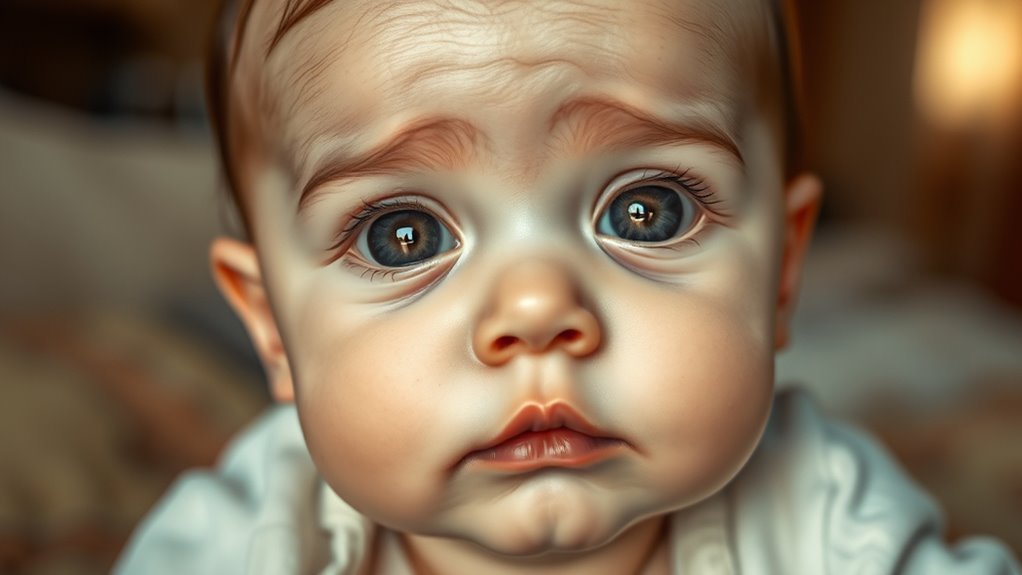
A baby’s stare isn’t just curiosity—it’s a powerful way they connect with the world around them. When a baby stares, they’re drawn to beautiful faces and unique features, using their attention to explore and learn.
Their eyes naturally seek out novelty, like colorful hair or distinct accessories, capturing their interest and encouraging engagement. This stare creates an emotional connection, especially when directed at caregivers, fostering a sense of safety and bonding.
You’ll notice that babies focus longer on faces they find appealing, showing an instinctive preference for beauty. Their stare signals active brain involvement, processing the environment as they engage with people and objects.
What Babies Learn When They Stare: Brain Growth and Social Skills
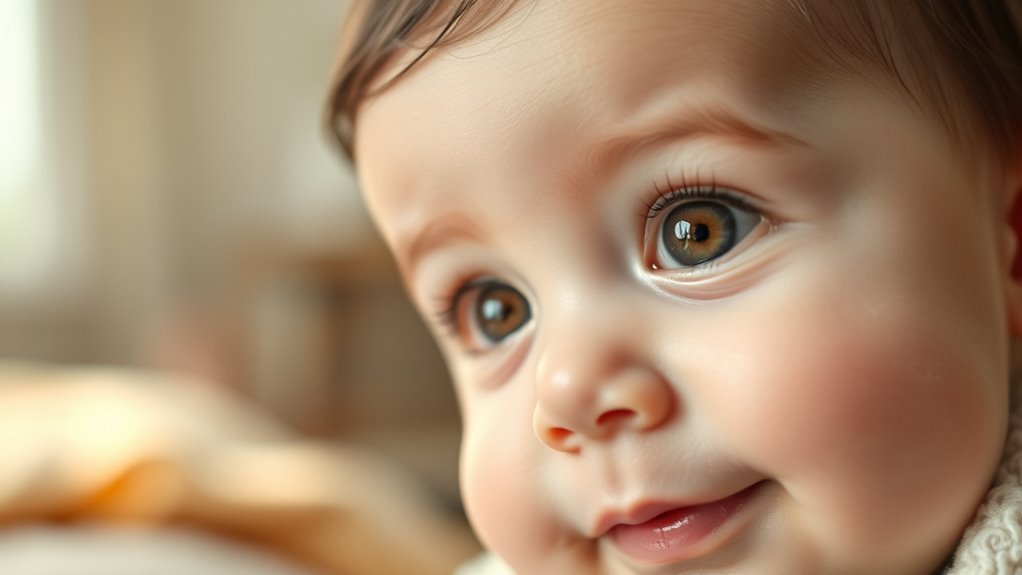
When your baby locks eyes with you, their brain sparks with activity, soaking in information that fuels rapid growth—up to 64% in just the first three months. This staring isn’t just cute; it’s a powerful tool for cognitive development.
Through mutual gaze with you, the caregiver, your baby’s brainwaves synchronize with yours, strengthening neural connections vital for social skills and emotional regulation. During these early interactions, your curious infant learns to read emotional expressions, helping them build an emotional map of safety and trust.
This face-to-face engagement also nurtures the prefrontal cortex, the brain area important for planning and decision-making later in life. So, when your baby stares, they’re actively shaping their brain growth and social abilities, laying foundations for healthy emotional and cognitive development.
Frequently Asked Questions
Do Babies Stare at You When You’re Attractive?
Yes, babies do stare longer when you’re attractive because they’re naturally drawn to appealing faces. Your unique features catch their attention, helping them engage and connect.
This supports their cognitive and emotional development. It’s pretty fascinating how even little ones pick up on these things, right?
Why Are Babies Drawn to Certain People?
Like moths to a flame, babies are drawn to you because your unique features, expressions, and emotional vibes capture their curiosity. Your face helps them learn, feel safe, and connect emotionally, making you fascinating to them.
It’s pretty amazing how they pick up on all those little things, right? Babies really tune in to the people around them, especially those who make them feel secure and happy.
What Is the Spiritual Meaning of Babies Staring at You?
When a baby stares at you, they’re connecting with your true essence, sensing your emotional and spiritual energy.
You’ll feel their pure, innocent gaze reflecting divine love, inviting you to embrace mindfulness and deepen your bond.
Why Do Babies Only Stare at Certain People?
When a baby locks eyes with you, it’s like they’ve found a shining star in the night sky—your unique features, movements, and warmth draw them in.
It makes you their special beacon of curiosity and comfort.
Conclusion
When a baby gazes at you, they’re sharing a quiet moment of wonder and trust. That steady look isn’t just curiosity—it’s a gentle invitation to connect.
It’s a tender way they’re learning love and life. So, next time those big eyes meet yours, cherish the subtle magic.
They’re quietly weaving the threads of a beautiful bond, one look at a time. You’re not just seen; you’re becoming their world.
When a baby stares at you, it means they feel safe and interested. It’s their way of expressing trust and building a connection. These looks are more than just cute moments—they’re the foundation of emotional bonding and early communication. So treasure those baby gazes; they’re the start of a lifelong relationship filled with love and understanding.