What Do Baby Pigeons Look Like at Different Stages?
You’ll spot baby pigeons starting as tiny, pink hatchlings called squabs, with closed eyes and sparse yellowish down. These little guys look fragile and completely dependent on their parents.
It’s fascinating to see how quickly they grow in just a few days. By day five, their eyes open, and they begin growing rapidly while still needing lots of care.
Around day ten, pin feathers start to show up on their wings and back. This is a clear sign they’re getting ready to develop their adult plumage.
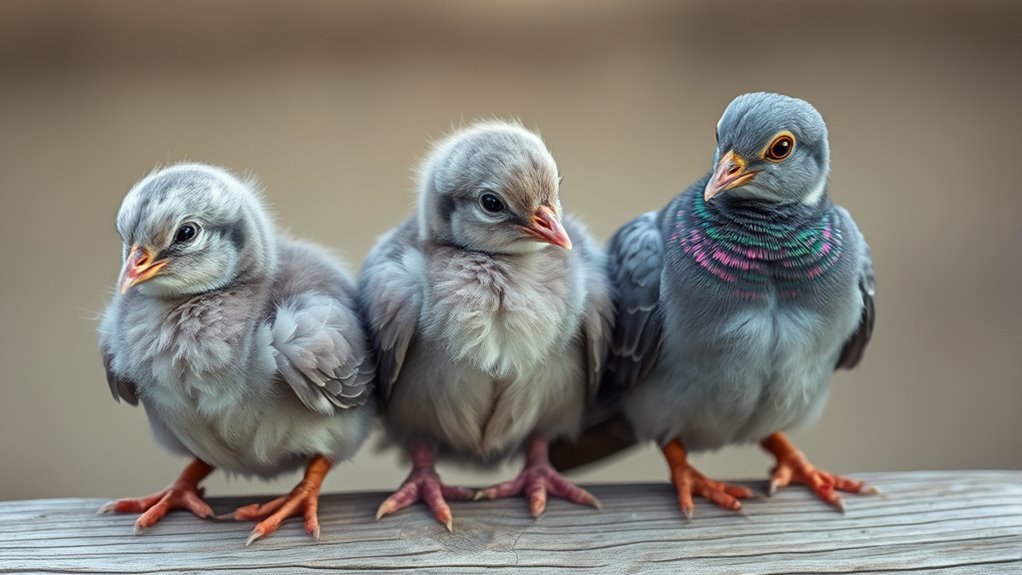
By four weeks, they look like fledglings covered in soft down. They’re practicing independence but still rely on their parents for feeding.
Keep watching, and you’ll discover how their features keep changing as they grow up. Baby pigeons really do go through some amazing stages!
Key Takeaways
- Hatchlings are tiny, pink or grayish, with sparse yellowish down and closed eyes. They are fully dependent on their parents.
- By day five, baby pigeons open their eyes and grow rapidly. They still rely a lot on parental care at this stage.
- Around day ten, pin feathers start to appear on their wings, back, tail, and breast. This shows they’re beginning to transition to adult plumage.
- Fledglings, which are about 25 to 32 days old, weigh between 270 and 350 grams. They have soft down feathers and start feeding independently and perching.
- Juveniles look a lot like adults by four weeks old but still have soft down. They also have a pinkish-gray cere and don’t yet show the iridescent neck colors.
What Baby Pigeons Look Like As They Grow From Hatchling To Fledgling
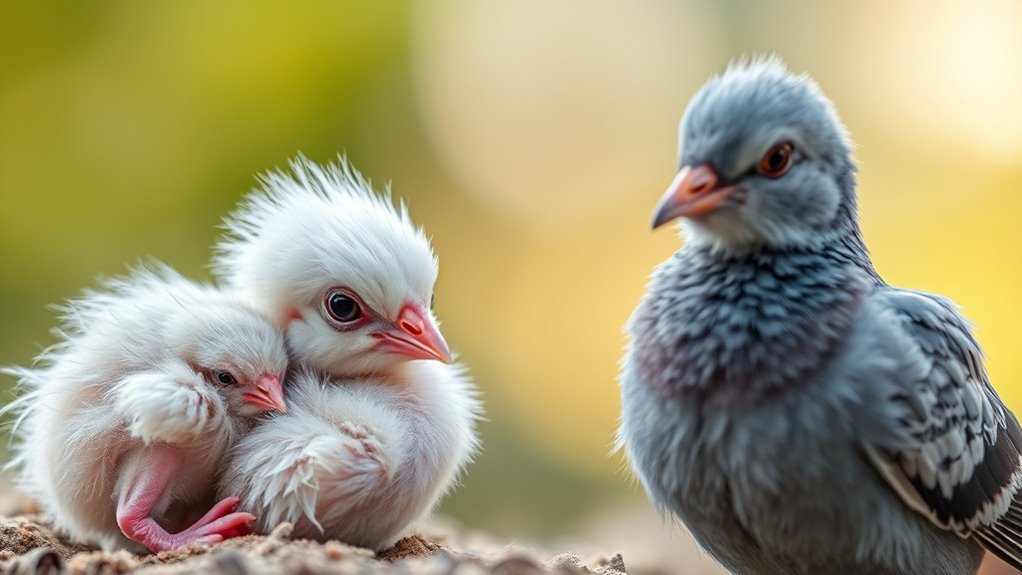
Although baby pigeons, called squabs, start out as tiny, blind, and helpless hatchlings with pink or grayish skin and sparse yellowish down, they grow quickly and change a lot within their first month. In the nest, these young birds develop rapidly; by day five, their eyes open, and they gain size.
Around day ten, pin feathers appear on wings, back, tail, and breast, signaling the start of adult plumage development. By the time they reach fledgling stage, usually between 25-32 days old, squabs weigh 270-350 grams and still have soft downy feathers.
At this point, fledglings begin adapting to higher perches and practicing independent feeding, reflecting their growing independence. Understanding their nesting habits helps you appreciate these transformations from vulnerable hatchlings to more capable young birds.
How To Identify Baby Pigeons By Their Changing Features
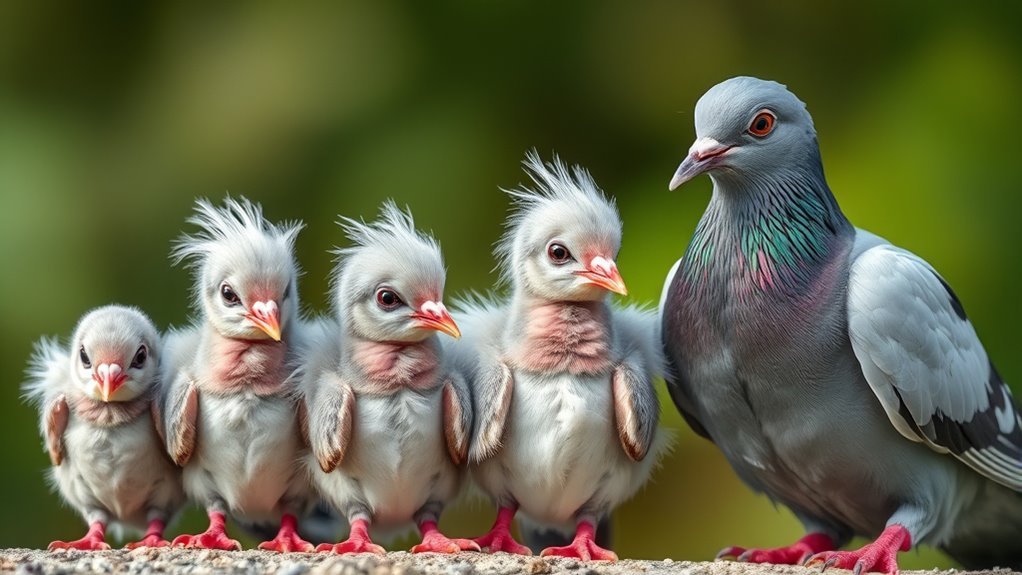
As baby pigeons grow, their features change noticeably, making it easier for you to identify their age and stage of development. When squabs hatch, they’re tiny, about 5 cm long, and covered in sparse yellowish down feathers.
By a week old, their eyes start opening, and their bodies grow quickly. Around two weeks old, pin feathers emerge on wings, back, tail, and breast, signaling a move toward fledging.
By one week, baby pigeons open their eyes; by two weeks, pin feathers appear signaling rapid growth.
By four weeks, squabs begin fledging, looking more like adult pigeons but still sporting soft down feathers. Once fledged, juvenile pigeons have a pinkish-grey cere and lack the iridescent neck colors seen in adults.
If you observe nesting birds, these changing features help you identify their precise age and development stage accurately. It’s pretty handy when you want to know exactly how old they are!
Frequently Asked Questions
How Can You Tell the Age of a Baby Pigeon?
You can tell a baby pigeon’s age by checking its size, eye openness, and feather development. Younger squabs are blind and featherless, while older ones show pin feathers, open eyes, and darker plumage as they near fledging.
It’s pretty straightforward once you know what to look for. Just take a close look at those features, and you’ll get a good idea of how old the little bird is.
What Does a 3 Week Old Pigeon Look Like?
You’d swear a 3-week-old pigeon’s feathers are trying to take over the world—they’re sprouting wing, back, and tail feathers!
Its eyes are wide open, and it’s practicing short flights, getting ready to leave the nest.
How Rare Is It to See Baby Pigeons?
You’ll rarely see baby pigeons because they stay hidden in nests for weeks. When they do appear, they’re usually fledglings nearby, still dependent on parents.
What Does a Juvenile Pigeon Look Like?
Imagine spotting a young pigeon with soft, fading down feathers and a pinkish-grey cere. You’ll notice it’s darker than a chick but lacks adult iridescence.
It might be perched nearby, practicing short flights and making soft coos. Young pigeons aren’t as flashy as adults yet, but they’re definitely starting to get the hang of flying.
Conclusion
As you watch baby pigeons grow, you’ll see their features shift from fluffy hatchlings to sleek fledglings. You might’ve heard they’re all awkward and weak at first, but the truth is, these little birds are surprisingly resilient and quick learners.
So next time you spot a baby pigeon, remember—it’s not just cute fluff; it’s a tough survivor in the making. These baby pigeons are mastering the skills they need to thrive in the city.
Baby pigeons go through different stages, starting as helpless hatchlings and gradually growing feathers and strength. Watching them change shows how adaptable and strong they really are. Understanding what baby pigeons look like at different stages helps us appreciate their journey from vulnerable chicks to confident city birds.