What Is a Baby Raccoon Called?
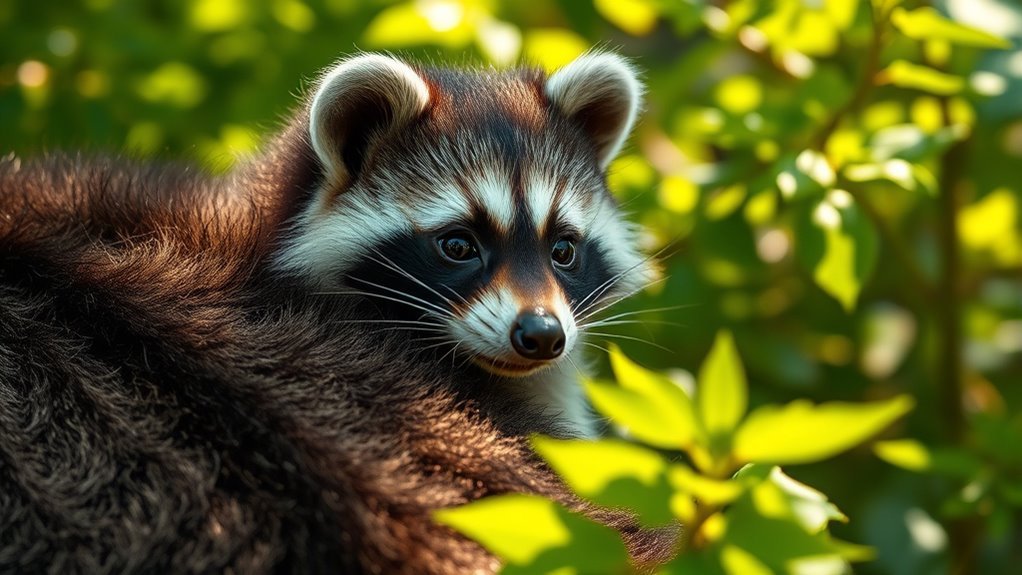
You’d call a baby raccoon a “kit,” which highlights their fragile, early-life stage. Sometimes, they’re also called “cubs.” These terms are commonly used to describe young raccoons as they grow and develop.
Kits are born blind and helpless, relying entirely on their mother for care as they grow. They open their eyes around three weeks and start exploring by eight weeks.
They stay with mom up to 14 months to learn survival skills.
If you want to understand more about their family life and development, there’s plenty to discover. It’s pretty fascinating how much they rely on their mom during those first months!
Key Takeaways
- A baby raccoon is called a “kit,” which shows it’s in the early stage of life as a young mammal.
- Sometimes, kits are also called “cubs” depending on the context.
- The term “kit” really points out how vulnerable and in need of care young raccoons are.
- Knowing this term “kit” makes it easier to talk about raccoon care and development.
- It’s pretty important to understand this, especially if you’re involved in wildlife rehabilitation or conservation efforts.
What Is a Baby Raccoon Called and Why Does It Matter?
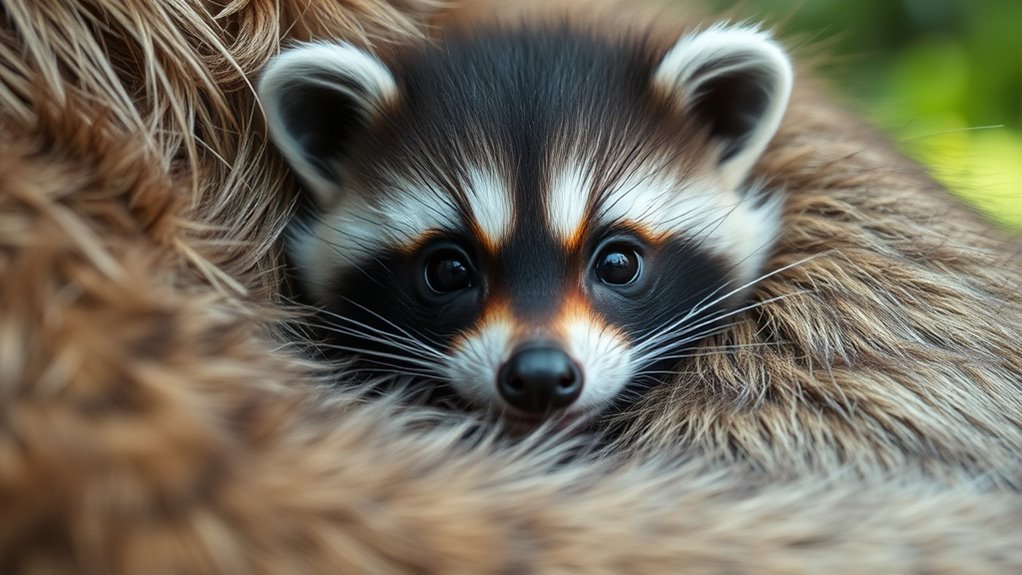
A baby raccoon is called a “kit,” a term that highlights its early stage of life as a young mammal. When raccoon mothers give birth, they usually have a litter of three to six kits, though litters can reach up to eight.
These baby raccoons are born blind and helpless, with their eyes closed for 18 to 24 days. Because they’re so dependent on their mother during this time, understanding this terminology helps you recognize their vulnerability.
Whether you’re a wildlife rehabilitator or simply curious, knowing that these young raccoons are called kits—and sometimes cubs—allows you to communicate clearly about their care and development.
This knowledge is essential when you encounter or assist these tiny creatures in the wild.
Baby Raccoon Names: Family Groups and Development Stages
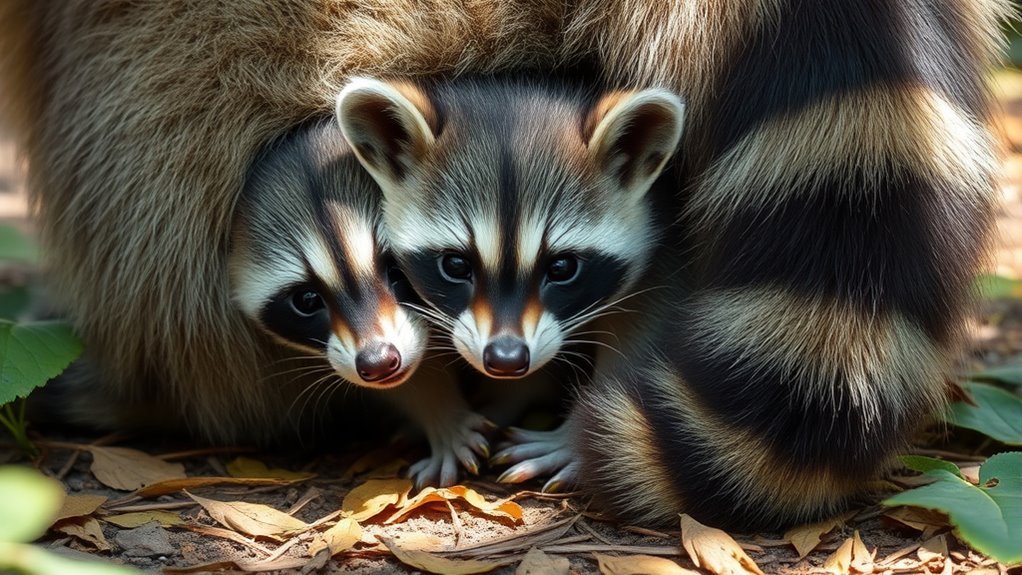
Understanding what baby raccoons are called sets the stage for learning about their family groups and how they grow. Baby raccoons are called kits and are born completely dependent on their mother raccoons.
A group of baby raccoons is known as a litter, usually consisting of three to six kits. During the first months, kits open their eyes and begin exploring, developing crucial survival skills.
Their gestation period prepares them for a fragile start, but they gain independence gradually, staying with their mothers for 10 to 14 months. It’s quite a journey from being tiny and helpless to becoming more self-reliant.
| Stage | Description |
|---|---|
| Birth | Kits are blind, 2-3 ounces, 3-5 in. |
| 18-24 Days | Eyes open |
| 8-9 Weeks | Start walking, exploring |
| 10-14 Months | Gain independence, learn survival skills |
Frequently Asked Questions
What Is a Bunch of Baby Raccoons Called?
A bunch of baby raccoons is called a “gaze” or a “nursery.”
When you see multiple kits together, you’re looking at one of these groups.
They usually come from the same mother during a single litter.
What Is the Proper Name for a Baby Raccoon?
Like a tiny shadow in the night, a baby raccoon is called a “kit” or “cub.” You’ll find these little ones born blind and helpless, growing quickly as they open their eyes to the world.
It’s pretty amazing how fast they develop, isn’t it? Before you know it, these kits are exploring and getting ready for life on their own.
What Is a Female Raccoon Called?
A female raccoon is called a sow. You’ll find she’s the one giving birth, usually once a year.
She raises her kits with strong maternal care until they’re independent, often around 10 to 14 months old. It’s pretty amazing how dedicated she is!
What Is a Pack of Raccoons Called?
A pack of raccoons is called a “gaze” or a “nursery,” especially when babies are involved.
You’ll notice these terms highlight their playful nature and strong family bonds as they explore and forage together.
It’s pretty cool how these little creatures stick close and have fun while looking for food. Makes you see raccoons in a whole new light, right?
Conclusion
So, next time you spot a baby raccoon—called a kit, by the way—don’t just see a furry bandit in training. Picture a tiny, masked mischief-maker plotting world domination from your trash cans.
Knowing their name isn’t just trivia; it’s your secret weapon in understanding these backyard ninjas. After all, calling them “kits” makes their chaotic charm sound way more adorable than “little garbage thieves,” right?
Welcome to the wild side of cute! Remember, a baby raccoon, or kit, is more than just a mischievous critter. Recognizing these kits helps you appreciate their playful nature and unique role in the ecosystem. So next time you see a baby raccoon, you’ll know exactly what to call that adorable little furry bandit.