

When Can a Baby Go in a Pool How to Guide
You can safely take your baby to the pool around six months old, once they have strong head control and can regulate body temperature better. At this age, your little one is more ready for water fun, making it an ideal time to introduce them to swimming.
Choosing the right pool environment is key to a positive experience.
Pick a clean, warm pool with low chlorine levels and avoid harsh chemicals. Always keep your baby within arm’s reach and don’t rely on flotation devices. Safety first, right?
Start with short swims of 20 to 30 minutes, and watch for signs of discomfort. If you want to guarantee a smooth first pool experience, there’s more you should know.
Key Takeaways
- Babies can safely start pool visits around 6 months old when they have good head control and better temperature regulation.
- Choose a clean, warm pool with low chlorine to protect the baby’s sensitive skin.
- Always provide constant, hands-on supervision and stay within arm’s reach of the baby.
- Keep the first swim session brief, about 20 to 30 minutes, and watch for signs of discomfort.
- Prepare by packing swim diapers, towels, dry clothes, and consider gradual exposure or swim lessons for comfort.
When Can Babies Safely Go in the Pool?
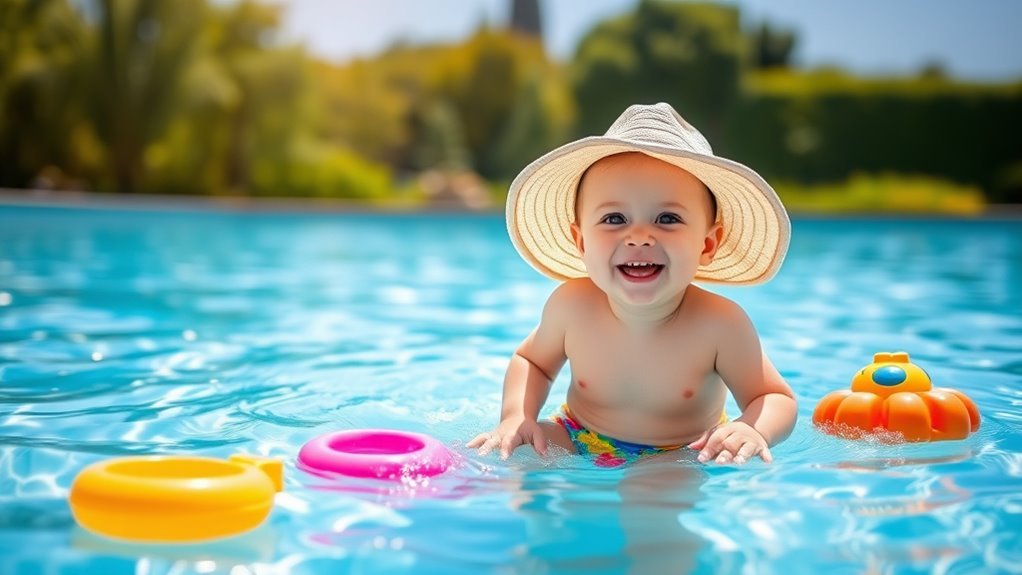
Although every baby develops differently, you can usually start taking your little one to the pool around 6 months old. By then, they have better head control and can regulate their body temperature more effectively.
Before swimming, make sure the pool is clean, warm, and free from harsh chlorine levels. You don’t want anything that might irritate your baby’s sensitive skin.
Never rely on a flotation device for water safety. Constant, hands-on supervision is essential to keep your baby safe.
Avoid hot tubs altogether, as they can be too hot and unsafe for infants.
When you bring your baby to the pool, keep a close eye on their body temperature. Be ready to get them out if they seem cold or uncomfortable.
With the right precautions, your baby’s first pool experiences can be both safe and enjoyable.
Getting Your Baby Ready for Their First Pool Day
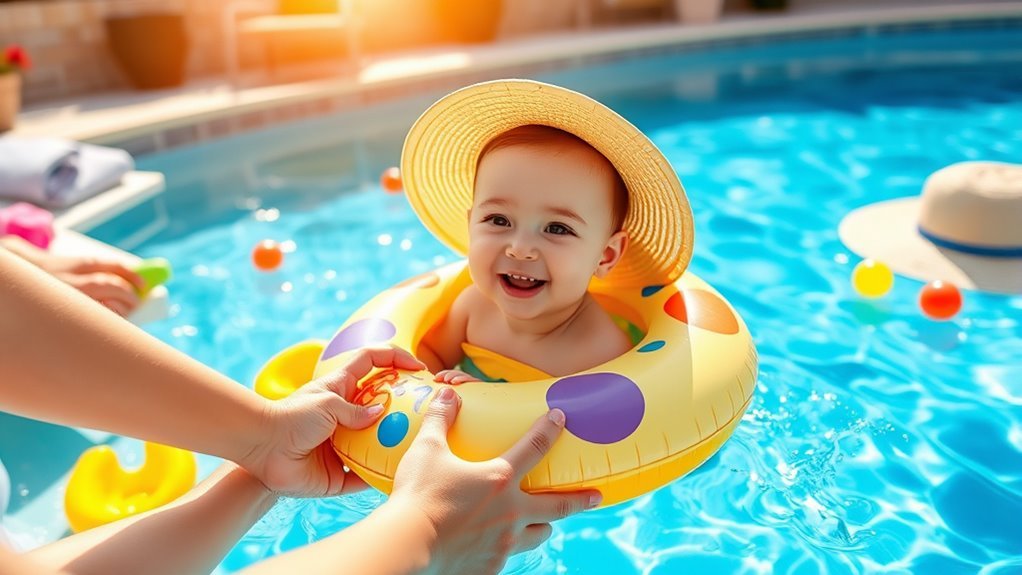
Before you take your baby to the pool for the first time, consult your pediatrician to confirm they’re ready. This is usually around six months old, when head control is strong.
When your baby is 6 months, choose a well-maintained pool with warm water and low chlorine levels. This helps protect their sensitive skin.
Keep their first pool visit brief—about 20 to 30 minutes. Don’t forget to pack essentials like a swim diaper, towel, and dry clothes.
During pool time, provide constant touch supervision within arm’s reach to guarantee safety. Always keep an eye on your baby for any signs of discomfort or shivering.
Introducing swim lessons gradually can help your baby get comfortable with water. By preparing carefully and monitoring closely, you’ll create a positive and safe experience for your baby’s first pool day.
Frequently Asked Questions
Can I Put a 2 Month Old in a Swimming Pool?
You can take a 2-month-old to a warm, clean pool briefly, but always check with your pediatrician first.
Stay close, watch for shivering, and avoid sunscreen—keep your baby shaded and dressed properly.
It’s all about keeping your little one safe and comfortable while enjoying the water together.
When Can You First Put a Baby in a Pool?
You can first put a baby in a pool around 6 months, as 70% of infants develop better head control by then. Always guarantee warm water, brief visits, constant supervision, and consult your pediatrician first.
It’s super important to keep the water warm so your little one stays comfy. Keep swim times short, and never take your eyes off them. And hey, checking with your pediatrician before you start is always a smart move!
Can a 3 Month Old Go in a Chlorine Pool?
You shouldn’t put a 3-month-old in a chlorine pool yet. Their skin and immune system are too sensitive, and they lack head control.
It’s better to wait until around 6 months. And always check with your pediatrician first before you take the plunge.
Can You Take a 4 Month Old in a Swimming Pool?
You can gently introduce your 4-month-old to a swimming pool, but you’ll want to keep their time short and consult your pediatrician first.
Always watch for signs of discomfort and prioritize their delicate needs carefully. It’s all about making sure they feel safe and happy during their first splash!
Conclusion
Now that you know when your baby can safely splash in the pool, getting ready becomes a breeze. Preparing with patience, packing proper gear, and practicing poolside precautions guarantees a smooth, safe, and splendid swim session.
Remember, your little one’s safety and smiles should always be the priority. So, plunge into this delightful experience with confidence, care, and a sprinkle of sunshine.
Making magical memories during your baby’s first pool time is what it’s all about. With the right preparation and knowledge on when a baby can go in a pool, you’re set for fun and safety. Enjoy every splash and smile while keeping safety top of mind—this is how those precious moments turn into lifelong memories!