How Long Do Baby Carrots Last in the Fridge
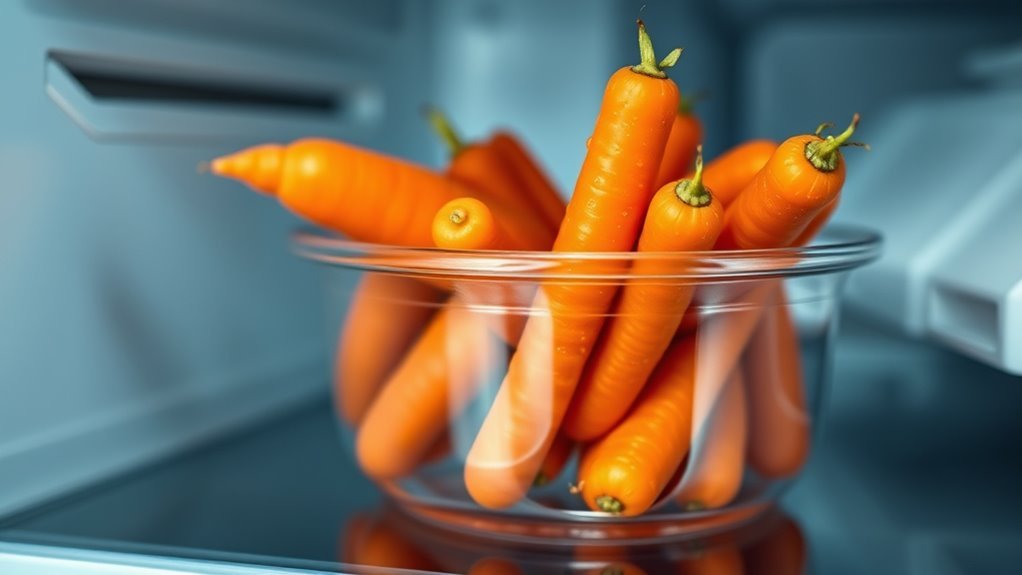
You can keep baby carrots fresh in the fridge for about 2 to 3 weeks if you store them properly.
Baby carrots last longer when you take a few simple steps to maintain their crispness and flavor. Using an airtight container or a sealed bag in the crisper drawer helps maintain humidity and prevents them from drying out.
Avoid washing baby carrots before storing them to reduce the risk of spoilage. If they start to lose their crunch, don’t worry! Just soak them briefly in ice-cold water to bring back their firmness.
Also, keep baby carrots away from ethylene-producing fruits like apples, which can speed up spoilage. These little tricks make a big difference in keeping your baby carrots crisp and fresh for weeks.
Key Takeaways
- Baby carrots typically last 2 to 3 weeks when stored properly in the fridge.
- Store baby carrots in a sealed bag or covered container in the crisper drawer for best freshness.
- Avoid washing carrots before storage to prevent excess moisture and spoilage.
- Submerging carrots in water and changing it every 3 to 5 days helps maintain crispness.
- Regularly check for sliminess or off-smells as signs of spoilage to ensure safety.
How Long Baby Carrots Stay Fresh in the Fridge
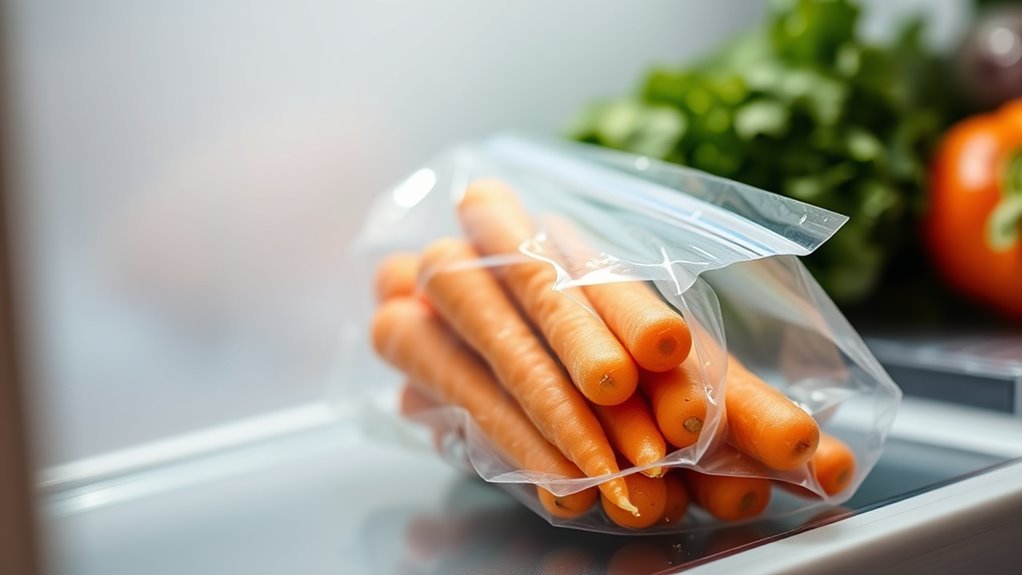
While baby carrots can last about 2 to 3 weeks in the fridge, you’ll want to store them properly to keep them fresh. To maximize freshness, store carrots in a covered container or sealed bag inside the crisper drawer.
You can also use the water method—submerging baby carrots in water and changing it every 3 to 5 days—to maintain crispness. It really helps keep them nice and crunchy.
Watch out for white blush, a harmless white film caused by dehydration; it’s not a sign of spoilage. So, no need to toss them just because of that.
Avoid placing baby carrots near ethylene gas-producing fruits like apples and bananas, as the gas speeds up spoilage. Keep them apart to make your carrots last longer.
Always check for signs of spoilage such as sliminess or off-smells to guarantee food safety. Proper storage helps you enjoy fresh baby carrots longer in your fridge.
How to Keep Baby Carrots Crisp and Fresh
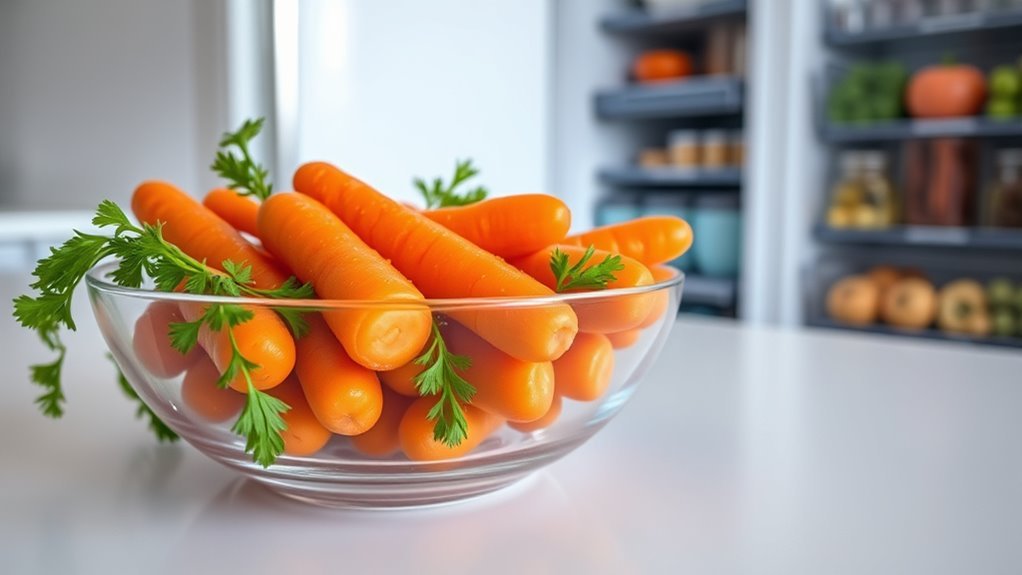
Keeping baby carrots crisp and fresh for up to three weeks is easy when you store them in an airtight container filled with water. To keep them fresh, follow these steps:
First, use an airtight container to prevent air exposure. This helps stop dehydration and that annoying white appearance. Then, fill the container with water to keep the baby carrots hydrated.
Store the container in the fridge’s crisper drawer for the best freshness. If your baby carrots lose firmness, don’t worry! Just soak them in ice-cold water for a few hours to bring back their crispness.
One more tip: avoid washing baby carrots before storing them. Excess moisture can actually encourage spoilage. By keeping air out and maintaining the right humidity in the crisper drawer, you’ll enjoy fresh, crisp baby carrots for longer.
Frequently Asked Questions
How Do You Know if Your Baby Carrots Have Gone Bad?
You know your baby carrots have gone bad if they’re slimy, gooey, or smell unpleasant. Also, watch for fuzzy mold, dark spots, or severe limpness that won’t improve after soaking in cold water.
If your carrots look or feel like this, it’s best to toss them out. No one wants to eat carrots that have gone bad, right? Just keep an eye on their texture and smell to stay safe.
Do Baby Carrots in a Bag Go Bad?
Think of baby carrots in a bag as ticking time bombs; yes, they can go bad.
You’ll know when they turn slimy, moldy, or smell off—then it’s time to toss them before trouble starts.
Do Carrots Last Longer in the Fridge or Pantry?
You’ll find carrots last much longer in the fridge than in the pantry. Keeping them cold slows spoilage and keeps them crisp.
Store them in the crisper drawer or a sealed bag for best results. It really makes a difference!
How Do You Know When Carrots Are Too Old to Eat?
You’ll know carrots are too old when they develop dark spots, turn slimy, or smell sour.
Also, watch out for mold—that’s a clear sign to toss them.
Limp carrots might still be okay if you soak them for a bit.
But if they feel gooey or smell bad, it’s definitely time to say goodbye.
Conclusion
Think of baby carrots as little treasures in your fridge—each one holding a burst of freshness and crunch. By storing them properly, you’re not just keeping snacks; you’re preserving tiny moments of health and happiness.
So, treat them like the gems they are: keep them cool, sealed, and crisp. That way, every bite feels like finding a fresh new start, brightening your day with simple, crunchy joy.
When it comes to how long baby carrots last in the fridge, proper storage is key. Keep them in an airtight container or their original sealed bag, and they can stay fresh for up to two to three weeks. Adding a damp paper towel inside helps maintain moisture without making them soggy.
Remember, the secret to lasting freshness is keeping baby carrots cool and sealed. That way, you enjoy crunchy, delicious carrots every time you open your fridge.