What Does a Baby Bed Bug Look Like?
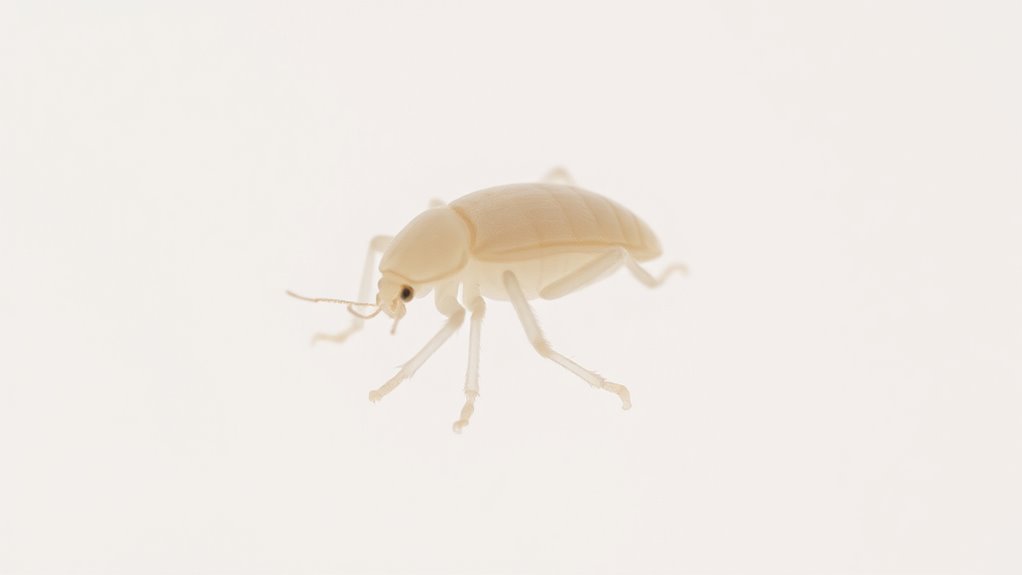
You’ll spot baby bed bugs, or nymphs, by their small, flat, oval bodies measuring 1.5 to 4 mm.
These tiny pests are usually translucent or off-white at first, which makes them pretty hard to see, especially on light surfaces.
After they feed, they swell up and darken to a brown color, so they become easier to spot.
Keep an eye out for tiny six-legged bugs with longer antennae around your mattress or bed frame.
If you want to uncover more about their signs and life cycle, keep exploring further.
Understanding what a baby bed bug looks like can help you catch an infestation early and keep your home bug-free.
Key Takeaways
- Baby bed bugs, called nymphs, have flat, oval-shaped bodies measuring 1.5 to 4 mm long. Their color is translucent or off-white before feeding and darkens to brown afterward.
- Nymphs have six legs, small heads, and longer antennae, making them distinct from adults. They blend into light surfaces and are difficult to spot due to their small, pale, see-through bodies.
- After feeding, nymphs swell and darken, making them easier to identify visually. So, even though they’re tiny and tricky to see at first, once they’ve fed, they stand out a bit more.
What Do Baby Bed Bugs Look Like? Size, Shape, and Color
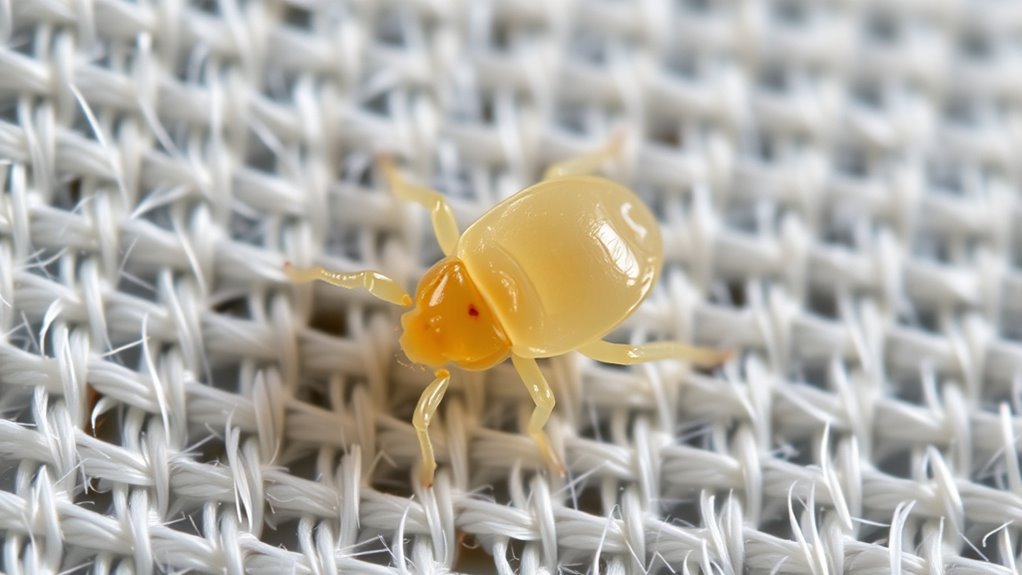
Baby bed bugs, known as nymphs, look quite different from adults in size, shape, and color. You’ll notice that nymphs have flat, oval-shaped bodies, much smaller than their adult counterparts. They measure just 1.5 to 4 mm long as they grow.
Their color starts off translucent or off-white, which helps them blend in easily with light surfaces. This makes baby bed bugs pretty difficult to spot. As they feed on blood, their color darkens to brown, but before feeding, they remain pale and almost see-through.
Their shape is less balloon-like than adults until after a meal, when they expand visibly. Despite their tiny size and delicate color, you can still spot nymphs by their six legs, small heads, and proportionally longer antennae.
How Can You Spot Baby Bed Bugs in Your Home?
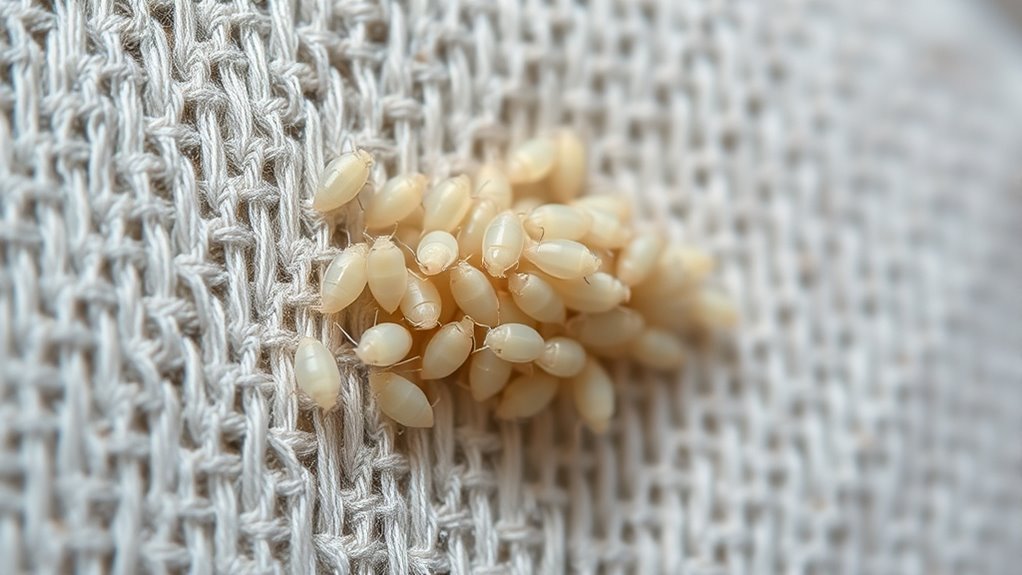
How can you tell if tiny bed bugs have invaded your home? Spotting baby bed bugs, or nymphs, early is key to preventing a full bed bug infestation. These nymphs are small, flat, and translucent, making them hard to see with the naked eye.
It helps to regularly check mattresses, bed frames, and nearby areas to catch them before they grow into adult bed bugs. Keep an eye out for signs like shed exoskeletons, bed bug eggs, or rusty spots on bedding from their feeding activity.
After feeding, nymphs become easier to spot because their bodies swell and darken with digested blood. Knowing the bed bug life cycle really makes a difference, letting you catch these pests early and stop them from spreading around your home.
Frequently Asked Questions
Can You See Baby Bed Bugs?
Yes, you can see baby bed bugs, but they’re tiny and often blend into light surfaces. You’ll need close inspection and good lighting to spot their small, flat bodies before they grow and become more visible.
It can be tricky at first, but once you know what to look for, it gets easier. Just take your time and check carefully!
What Bug Can Be Mistaken for a Bed Bug?
You might mistake booklice, which are about 1-2 mm long, for bed bugs because of their size. They’re pale and tiny, but unlike bed bugs, they don’t bite or feed on blood.
What Are Three Signs You Might Have Bed Bugs?
You might have bed bugs if you notice rusty stains on your sheets, bite marks in clusters on your skin, or find discarded exoskeletons in your bedding.
These signs indicate their presence even if you don’t see bugs.
How Many Bed Bugs if You See One?
If you spot one bed bug, you’re likely seeing the tip of the iceberg—there could be 20 to 30 more hiding nearby.
Don’t wait; act fast before they multiply into a full-blown infestation. It’s better to be safe than sorry when it comes to bed bugs.
Conclusion
Finding baby bed bugs can feel like spotting tiny shadows in a dark room—they’re small, pale, and easy to miss. Just like how a single spark can start a wildfire, one unnoticed baby bed bug can quickly lead to a full infestation.
So, trust your eyes and instincts; catching them early is your best defense. Remember, staying vigilant now keeps your home comfortable and bite-free later.
Baby bed bugs might be tiny, but ignoring them can cause big problems. By spotting these small pests early, you can prevent them from multiplying and taking over your space. Staying alert and knowing what a baby bed bug looks like helps you act fast, protecting your home and family from itchy bites and sleepless nights. Don’t wait until the problem grows—early detection is key to keeping your environment safe and bug-free.