When Do You Stop Burping a Baby?
You can stop burping your baby once they show signs of digestive maturity, usually between 4 to 6 months.
This is when your little one starts swallowing less air during feedings and can sit up better on their own.
You’ll also notice they stay calmer while feeding, fuss less, and seem more comfortable overall.
These are good signs that your baby is ready for fewer burping breaks.
If your baby seems content and happy, it’s a great time to gradually reduce how often you burp them.
Just keep paying attention to their cues and adjust as needed.
Stick around to discover some easy tips to make this transition smooth and stress-free for both you and your baby!
Key Takeaways
- Most babies stop needing burping between 4 to 6 months as their digestive system matures and they swallow less air.
- Signs to stop burping include improved independent sitting, calmness during feeding, and reduced spit-up or fussiness.
- Begin transitioning by burping less frequently, such as once during and once after feedings, while monitoring baby’s comfort.
- Resume burping if the baby shows discomfort, gas pain, or increased fussiness after feedings.
- Always keep the baby upright after feeding to help naturally relieve gas and reduce the need for burping.
Key Signs Your Baby Is Ready to Stop Burping
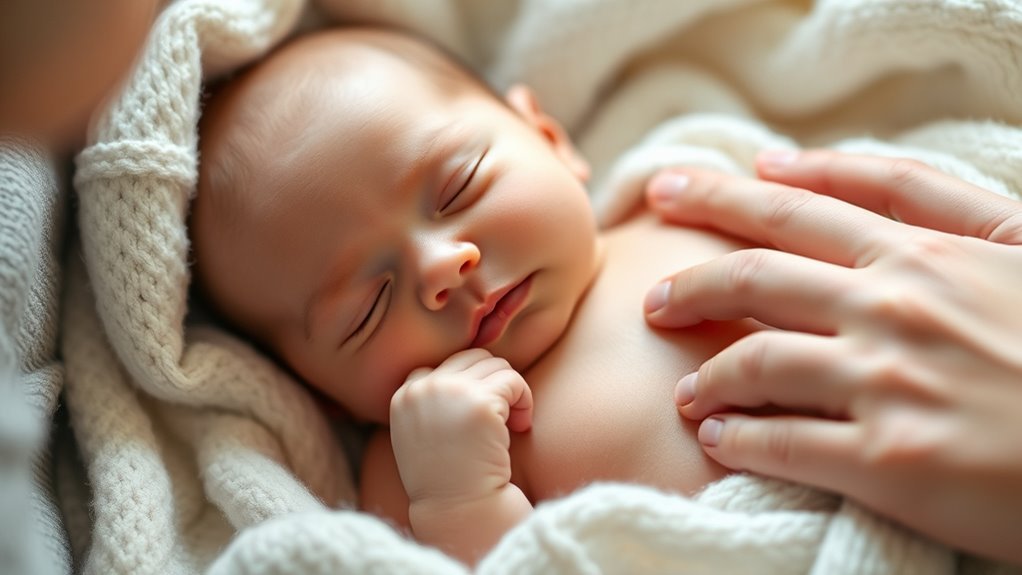
As your baby’s digestive system matures, you’ll notice key signs showing they’re ready to stop burping. Most babies between 4 to 6 months swallow less air during feeding, meaning they often no longer need help releasing trapped air.
As your baby’s digestion develops, they swallow less air and often no longer need burping help.
You’ll see signs like improved ability to sit up independently and a calm, relaxed demeanor during and after feedings. If your baby shows contentment, with less fussiness and reduced spit-up, it’s a good indicator they can handle digestion without burping assistance.
Some babies even develop self-burping skills during feeds, signaling they’re ready to stop the burping routine. Keep in mind, every baby develops differently—some may stop needing burping as early as 3 months, while others might take longer.
Watch for these signs to know when to ease off.
How to Gently Stop Burping Without Upsetting Baby
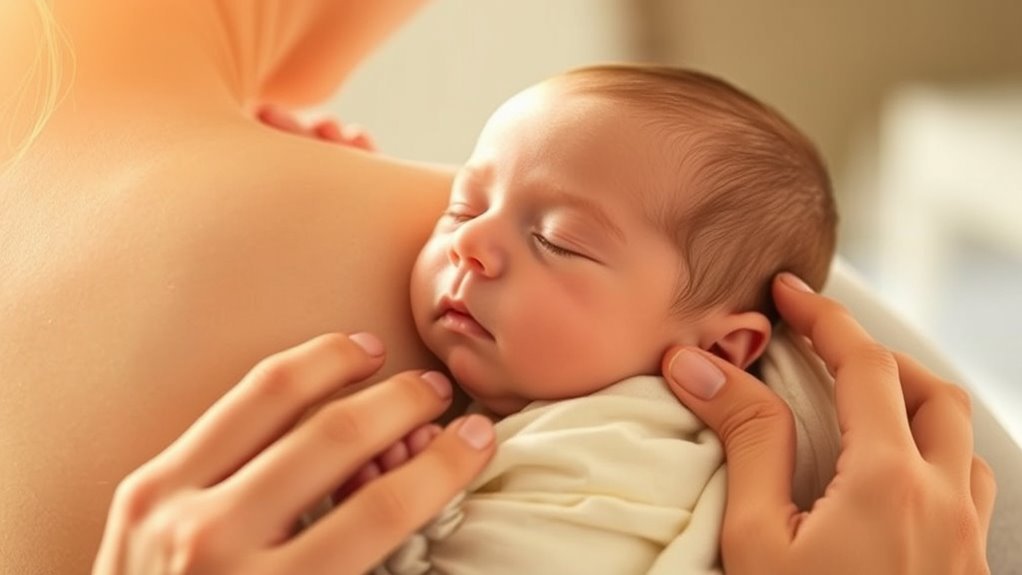
Although burping helps your baby feel comfortable, you can start easing off gradually by burping less often and paying close attention to their cues. Begin by burping your baby just once during and once after feedings, monitoring the baby’s comfort closely.
Look for signs that they’re ready to stop burping a baby, such as decreased fussiness and better control in an upright position. You can also try burping three-quarters through a feeding to align with their natural rhythm.
If your baby shows discomfort or increased air intake, don’t hesitate to burp them again. Always keep them upright after feeding to help relieve gas naturally.
Frequently Asked Questions
What Happens if I Don’t Burp My 3 Month Old?
If you don’t burp your 3-month-old, they’ll likely feel uncomfortable from trapped gas. This can cause fussiness, crying, spitting up, and disrupted sleep.
You’ll want to keep burping them until they burp naturally to ease their discomfort. It really helps make them feel better and more relaxed.
When Can I Put My Baby Down Without Burping?
You can put your baby down without burping around 4 to 6 months, especially if they’re content after feeding and can self-burp or move comfortably.
Just keep an eye out for any signs of discomfort. If they seem fussy or squirmy, it might mean they still need a burp.
Is It Okay to Feed a Baby Even After It Burps?
Imagine your baby’s tummy as a balloon—burping deflates it, so yes, you can definitely feed even after a burp.
If your little one’s still hungry and happy, keep going without worrying about air bubbles!
Do Hiccups Mean Baby Needs to Be Burped?
Hiccups don’t always mean your baby needs burping, but if they happen during or after feeding, it’s smart to try burping. It might help release trapped air and ease their discomfort.
Sometimes, burping can make a big difference. So, if your baby seems fussy or uncomfortable, giving it a go is definitely worth it!
Conclusion
Just like a kite finally letting go of its string to dance freely in the sky, your baby will signal when it’s time to stop burping. When they seem comfortable, calm, and less fussy after feeds, you can gently ease off.
Trust your instincts and your little one’s cues—this small step marks their growing independence. Remember, every baby’s journey is unique, so embrace this change with patience and love.
Knowing when to stop burping a baby is important for both you and your little one. When your baby feels settled and shows fewer signs of discomfort after feeding, it’s usually a good indicator that burping can be reduced or stopped. This helps your baby feel more comfortable and supports their natural development. So, pay attention to their signals and adjust accordingly. Stopping burping at the right time is a key part of your baby’s growth and your parenting journey.





One Comment