When Can Baby Chicks Go Outside: Step-by-Step Guide
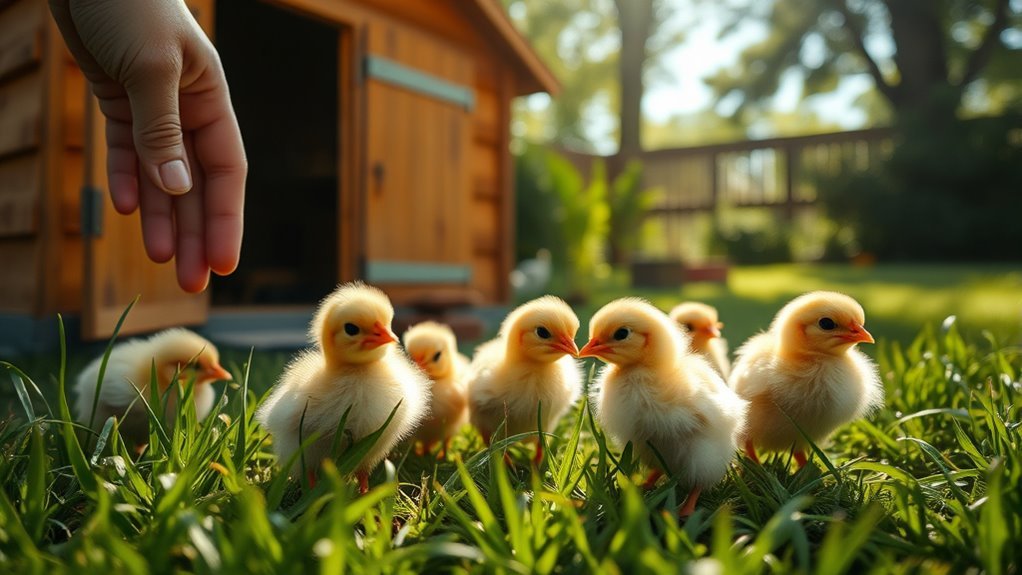
You can start moving your baby chicks outside once they’re fully feathered at around 6 to 8 weeks old and can regulate their body temperature. This is an important milestone because it helps them handle the outdoor environment better.
Gradual introduction to the outside world is key to keeping your chicks happy and healthy.
Begin with short, supervised outdoor sessions to let them get used to the new surroundings. Make sure nighttime temperatures stay above 60°F since baby chicks are sensitive to cold.
Creating a safe, predator-proof space is essential—think about shade, good ventilation, and protection from the wind.
Keep a close eye on your chicks for any signs of stress, and be ready to adjust the environment if needed. It’s a good idea to have supplemental heat nearby just in case.
Follow along to learn how to make this transition smooth and safe for your little flock!
Key Takeaways
- Baby chicks can start going outside between 6 to 8 weeks old once they are fully feathered and can regulate their body temperature.
- Make sure nighttime outdoor temperatures stay above 60°F (15°C) before letting chicks stay outside for longer periods.
- It’s best to introduce chicks to the outdoors gradually. Start with short, supervised trips and slowly increase the time as they get used to it.
- Set up a safe, predator-proof outdoor area that has good ventilation, windbreaks, and shaded spots to keep the chicks comfortable.
- Keep an eye on the chicks for any signs of stress or discomfort. If needed, adjust their outdoor time or provide extra heat to help them out.
Is Your Baby Chick Ready to Go Outside?
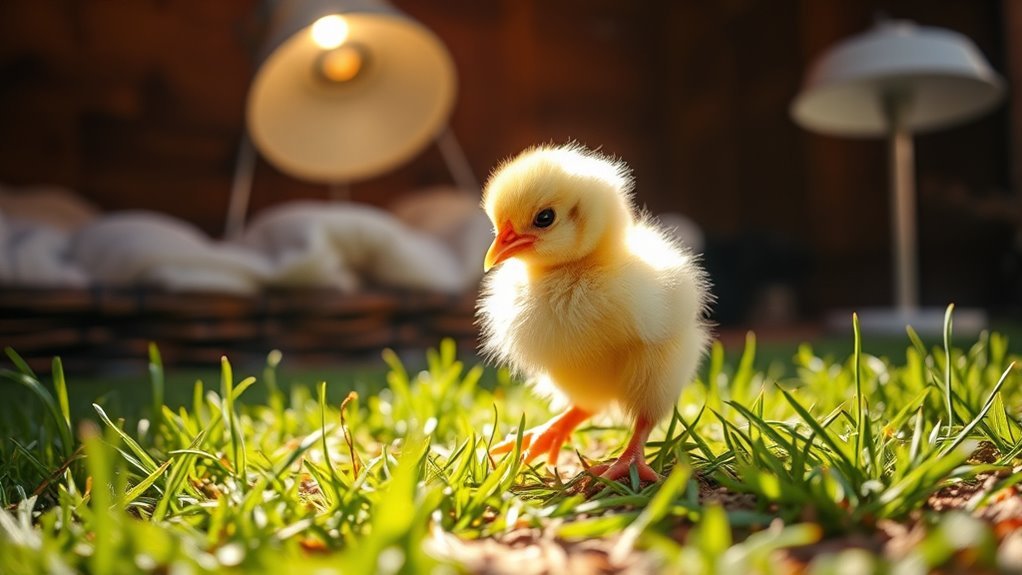
How do you know when your baby chick is ready to go outside? Typically, chicks are ready between 6 to 8 weeks old when they’re fully feathered. That means they can regulate their body temperature without a constant heat source.
Before moving them outdoors, keep an eye on outdoor conditions, especially nighttime temperatures. They should stay consistently above 60°F (15°C). You’ll want to get your chicks used to the outside gradually by letting them spend short periods outdoors. This helps avoid stress.
Monitor nighttime temperatures above 60°F and introduce chicks outside gradually to prevent stress.
Make sure the outdoor space is safe—check that it’s predator-proof with secure enclosures. Also, provide some shade to protect them from harsh weather.
Watch their behavior closely during this change. If you notice any signs of discomfort or stress, be ready to make adjustments. Taking these steps helps your chicks thrive safely outside.
How to Transition and Set Up a Safe Outdoor Space for Baby Chicks
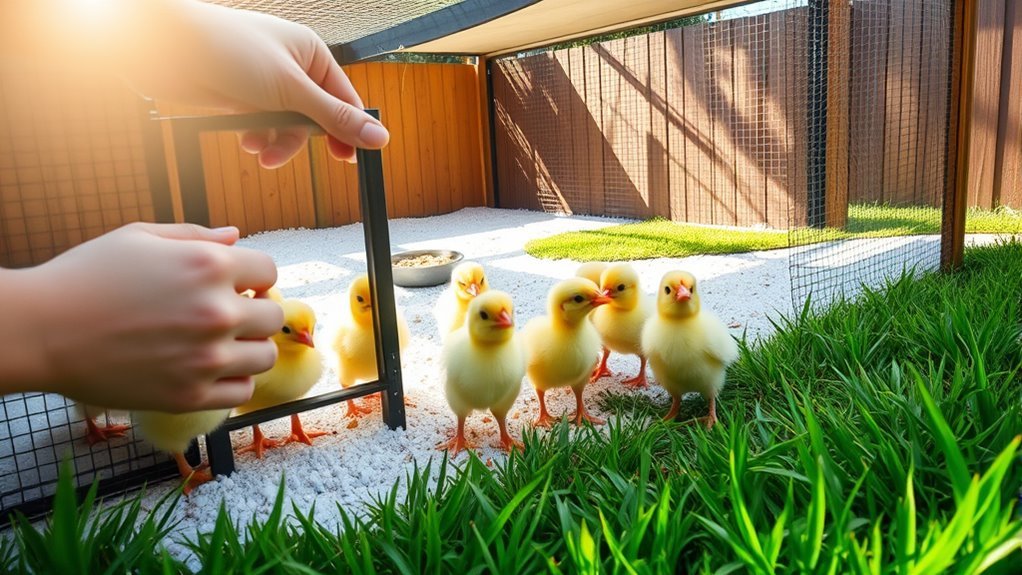
Before moving your baby chicks outdoors permanently, you’ll want to create a safe and comfortable environment that supports their growth and well-being.
Wait until your chicks are ready—usually around 6 weeks when feather development is complete—so they can regulate their body temperatures.
Set up a predator-proof chicken coop with secure hardware cloth and proper ventilation, including windbreaks to protect against harsh weather.
Gradually acclimate your chicks to outdoor temperatures by letting them have short, supervised outings.
Keep a brooder plate or another supplemental heat source available until they’re at least 8 weeks old.
This helps them adjust safely to cooler temperatures while preventing stress.
Frequently Asked Questions
How Early Can You Put Baby Chicks Outside?
You can start putting baby chicks outside as early as 3 weeks old if the weather’s warm and you introduce them gradually. Make sure they’re comfortable.
They should be fully feathered by 6 weeks. Also, avoid cold temperatures below 65°F.
Can 4 Week Old Chicks Go Outside Overnight?
No, you shouldn’t leave 4-week-old chicks outside overnight. They aren’t fully feathered and need warmth around 80°F.
It’s best to keep them indoors at night or provide extra heat. This helps prevent cold stress and keeps them safe.
At What Temperature Can I Move My Chicks Outside?
You can move your chicks outside when temperatures hit at least 80°F at 4 weeks old—anything less feels like the Arctic!
Make sure they have heat if it drops, and watch for cold stress carefully. It’s better to be safe than sorry with these little guys!
When Can Chicks Go Outside Without a Heat Lamp?
You can take your chicks outside without a heat lamp once they’re about six weeks old, fully feathered, and temperatures stay above 65°F.
Gradually increase outdoor time, watch for stress, and guarantee warm nights above 50°F. It’s all about making sure they’re comfy and safe as they get used to the outdoors.
Conclusion
Now that you know when your baby chick is ready to venture outside, you can make the shift smooth and safe. Just remember, don’t throw them in at the deep end—take it step by step.
Set up a cozy outdoor space where they feel secure and protected. This helps your chick get used to the new environment without feeling overwhelmed.
With patience and care, your little chick will soon be happily exploring the great outdoors. When can baby chicks go outside? The answer depends on their age, feather development, and weather conditions, so always keep those in mind.
By gradually introducing your chick to the outside world, you’re helping it build confidence and stay safe. Before you know it, your baby chick will be ready to spread its wings and enjoy the fresh air, sunshine, and all the wonders of the outdoors.





2 Comments